Applying to KAUST - Your Complete Guide for Masters & Ph.D. Programs (Upcoming Admissions)
Admissions Overview & Key Requirements

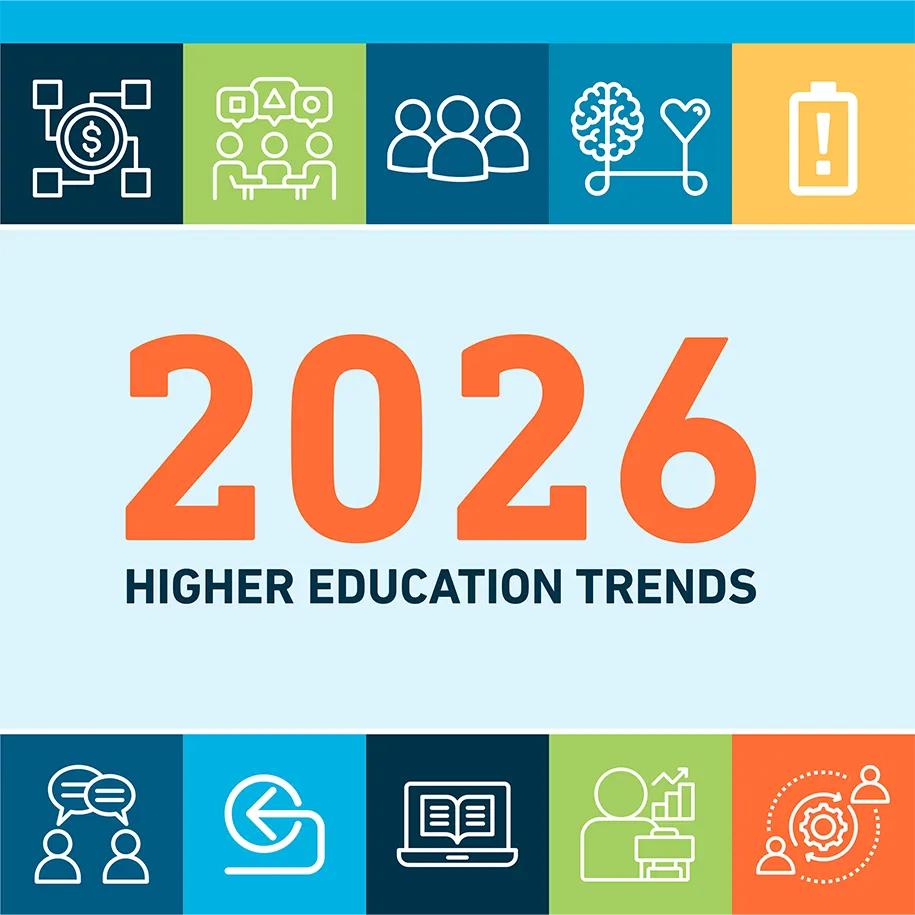
Financial strain is mounting across U.S. higher education. Many institutions are grappling with cuts to federal research funding, limits on student loans, and new taxes on endowments. These changes have forced universities to reassess staffing, program offerings, and operational models.
In 2025, some of the most well-resourced institutions were affected:
Graduate programs, once a major revenue source, are being hit by policy changes such as the elimination of the Grad PLUS loan option starting July 1, 2026. This change affects approximately 22% of current graduate borrowers and is likely to reduce enrollment. International student numbers also declined by 17% in fall 2025, costing the U.S. economy an estimated $1.1 billion.
States are stepping in to encourage efficiency:
Universities are also exploring ways to increase liquidity and rethink program arrays to maintain financial flexibility without sacrificing educational quality.
Trends reshaping U.S. higher education
To navigate these pressures, higher education leaders are focusing on five major trends. These trends point toward both challenges and opportunities for institutions to reinvent their role in preparing students for the future.
| Trend | Explanation | Examples / Institutions to watch |
|---|---|---|
| 1. Erosion of the revenue model | Declining enrollments, cuts in federal research funding, changes in student loans, and new taxes on endowments are straining university finances. Institutions must rethink budgets, staffing, and program offerings. | - University of Southern California laid off 900+ employees- Stanford University cut 363 staff- Northwestern University laid off 424 employees (~5% workforce)- Ohio State University cut low-enrollment majors; Oklahoma eliminated 41 programs |
| 2. Shift from “cost of college” to “value of a credential” | Colleges focus on the return graduates get from their degrees (employment, wages, mobility) rather than tuition costs. Emphasis on internships, apprenticeships, and measuring ROI of credentials. | - University of North Texas assesses “time to value” for 114 degrees- University of Wisconsin at Madison creating a College of Computing and AI- University of Georgia runs Student Industry Fellows Program |
| 3. Reset for sponsored research | Federal research funding is declining, prompting universities to explore philanthropy, corporate partnerships, and administrative efficiencies. Research focus may shift from basic science to applied, and indirect cost structures are being examined. | - Carnegie Mellon University exploring co-investment with government, corporations, and philanthropists- Schmidt Family Foundation funds interdisciplinary AI postdocs- SUNY Albany created President’s Advisory Board for Industry and Economic Development |
| 4. Mergers and strategic partnerships | Colleges are increasingly merging or forming partnerships to survive demographic declines and financial pressures, preserving missions while improving efficiency and scale. | - Antioch University + Otterbein University: shared graduate programs- Gannon University merging with Ursuline College- Pomona College negotiating acquisition of Claremont Graduate University- University of Adelaide + University of South Australia (Australia) |
| 5. Changing global higher education landscape | Decline in international students, competition from other countries, online education, and branch campuses abroad are reshaping enrollment strategies. U.S. universities must adapt to maintain global competitiveness. | - Illinois Institute of Technology opening campus in India- UAE investing $1.2B in National University of Dubai- India aiming to increase gross enrollment ratio to 50% by 2035- Harvard students offered transfers to Hong Kong and Malaysia universities |
Trend details: What they mean for students and universities
Global landscape shifts: International student numbers are declining due to visa restrictions and global competition. U.S. universities are responding with branch campuses, online programs, and expanded recruitment efforts to remain competitive.
For more information, please follow this link.
Share
Applying to KAUST - Your Complete Guide for Masters & Ph.D. Programs (Upcoming Admissions)
Admissions Overview & Key Requirements

An mRNA cancer vaccine may offer long-term protection
A small clinical trial suggests the treatment could help keep pancreatic cancer from returning

Registration Opens for SAF 2025: International STEAM Azerbaijan Festival Welcomes Global Youth
The International STEAM Azerbaijan Festival (SAF) has officially opened registration for its 2025 edition!
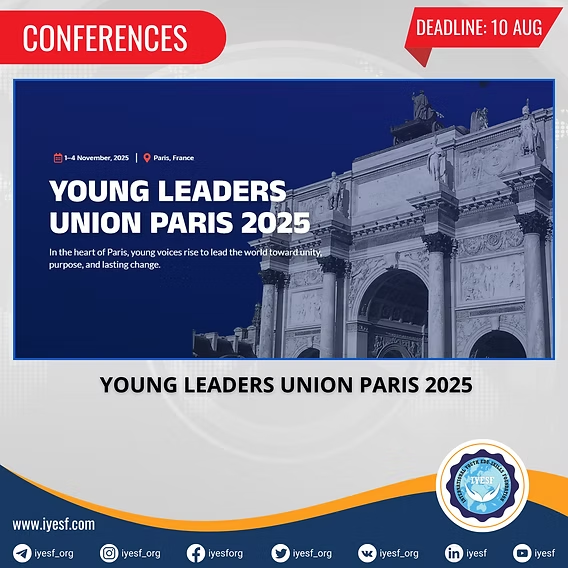
Young Leaders Union Conference 2025 in Paris (Fully Funded)
Join Global Changemakers in Paris! Fully Funded International Conference for Students, Professionals, and Social Leaders from All Nationalities and Fields

Yer yürəsinin daxili nüvəsində struktur dəyişiklikləri aşkar edilib
bu nəzəriyyənin doğru olmadığı məlum olub. Seismik dalğalar vasitəsilə aparılan tədqiqatda daxili nüvənin səthindəki dəyişikliklərə dair qeyri-adi məlumatlar əldə edilib.

Lester B Pearson Scholarship 2026 in Canada (Fully Funded)
Applications are now open for the Lester B Pearson Scholarship 2026 at the University of Toronto!