Applying to KAUST - Your Complete Guide for Masters & Ph.D. Programs (Upcoming Admissions)
Admissions Overview & Key Requirements

Classroom/ File: The Harpswell Anchor
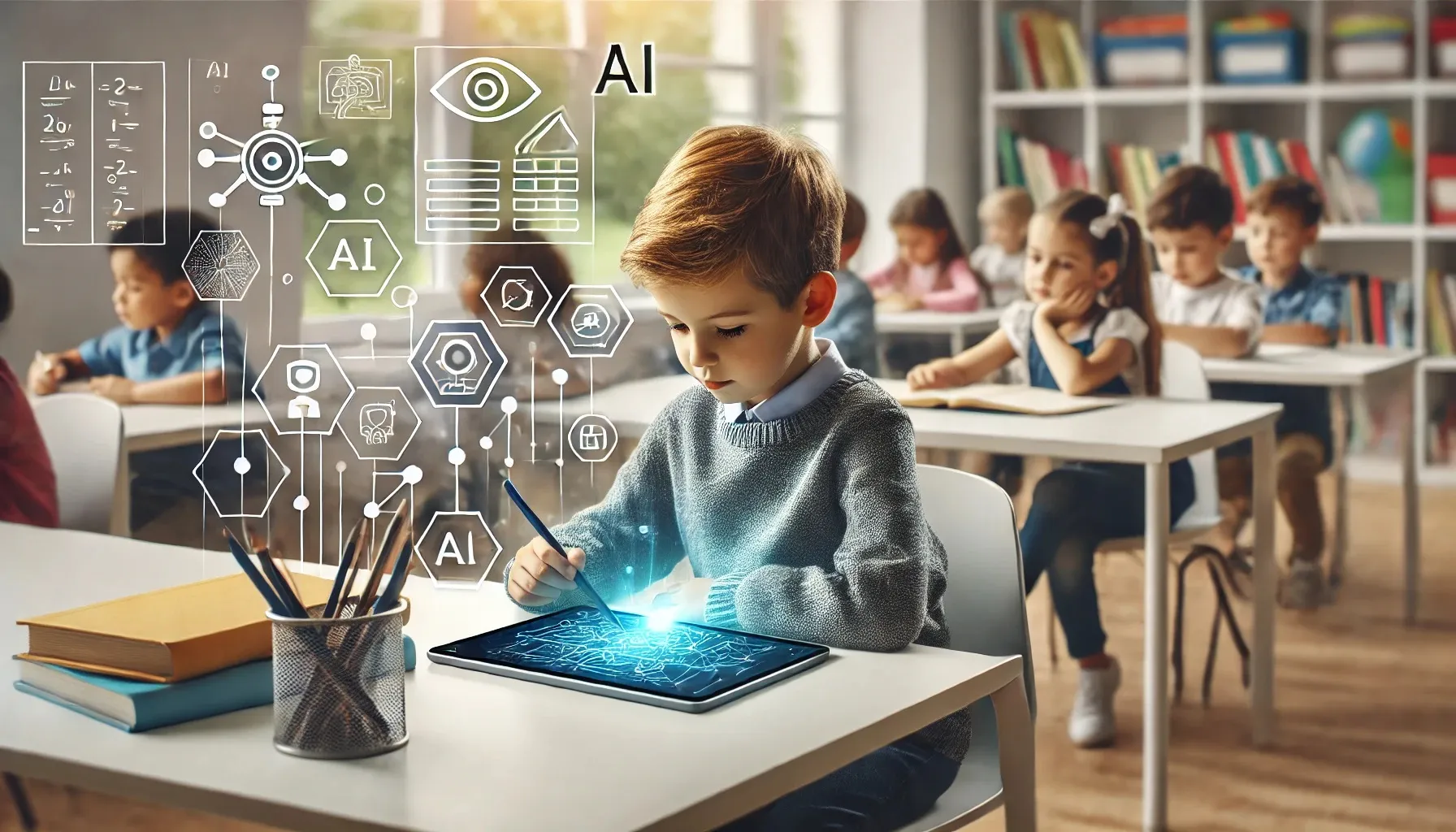
According to China Daily, AI in schools:
In December, the ministry designated 184 primary and secondary schools as AI education bases. Students are creating smart projects like voice-controlled lamps, humidifiers, and fans, using programming and voice recognition technologies. For instance, first-year students at Yangzhou High School study machine learning principles by comparing human and AI recognition of cherry and peach blossoms. At Changchun Experimental School, AI classes include robotics, drone operation, and 3D printing, with clubs allowing students to explore AI hands-on.
AI teaching resources and tools:
Students are using AI-powered translation apps and voice dictionary pens to solve challenging homework and generate creative ideas. Mohamed Ally, a professor at Athabasca University in Canada, notes that AI can provide one-to-one tutoring and support lifelong learning.
Higher education and AI:
Platforms like askpku.com at Peking University and OpenEdu4Fin at Dongbei University of Finance and Economics enhance teaching and learning efficiency. Northwest Agriculture and Forestry University uses AI to strengthen practical skills in smart agriculture. Zheng Qinghua, president of Tongji University, and Wang Huashu, a professor at Beijing Foreign Studies University, emphasize that generative AI has become an essential tool for personalized learning, giving students instant feedback and improving communication skills.
AI in assessment:
The Ministry reports that AI and big data have improved the efficiency and accuracy of grading and evaluation. Personalized reports help identify individual student needs. David Osher from the American Institutes for Research highlighted that AI analysis of 10 years of student data allows for predictive insights into education outcomes.
Redefining teacher roles:
Keric Lee, vice-principal in Hong Kong, explains that in the AI era, teachers shift from knowledge transmitters to guides and mentors, encouraging students to collaborate, reflect, and create. Assessment now focuses on creativity and problem-solving rather than memorization alone.
China sees AI as more than just a tool; it is a means to foster individual growth, creativity, and competitiveness. The goal is to nurture a new generation of learners equipped with 21st-century skills, combining technical proficiency with humanistic qualities.
Share
Applying to KAUST - Your Complete Guide for Masters & Ph.D. Programs (Upcoming Admissions)
Admissions Overview & Key Requirements

An mRNA cancer vaccine may offer long-term protection
A small clinical trial suggests the treatment could help keep pancreatic cancer from returning

Registration Opens for SAF 2025: International STEAM Azerbaijan Festival Welcomes Global Youth
The International STEAM Azerbaijan Festival (SAF) has officially opened registration for its 2025 edition!

Young Leaders Union Conference 2025 in Paris (Fully Funded)
Join Global Changemakers in Paris! Fully Funded International Conference for Students, Professionals, and Social Leaders from All Nationalities and Fields

Yer yürəsinin daxili nüvəsində struktur dəyişiklikləri aşkar edilib
bu nəzəriyyənin doğru olmadığı məlum olub. Seismik dalğalar vasitəsilə aparılan tədqiqatda daxili nüvənin səthindəki dəyişikliklərə dair qeyri-adi məlumatlar əldə edilib.

Lester B Pearson Scholarship 2026 in Canada (Fully Funded)
Applications are now open for the Lester B Pearson Scholarship 2026 at the University of Toronto!