Applying to KAUST - Your Complete Guide for Masters & Ph.D. Programs (Upcoming Admissions)
Admissions Overview & Key Requirements

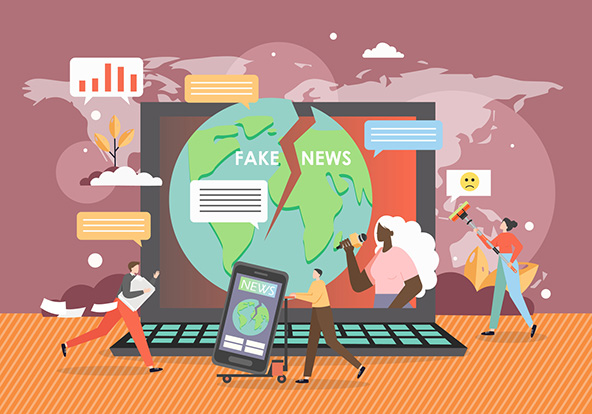
In today’s online environment, a polished article complete with expert quotes, precise dates and authoritative language can spread across platforms within hours. It can shape public debate, influence decisions and generate widespread reaction — only for readers to later discover that the experts never existed, the quotes were fabricated and the entire story was generated by artificial intelligence.
This scenario is no longer hypothetical. The rapid rise of generative AI has blurred the boundary between authentic information and synthetic content. While these systems were introduced with the promise of processing vast amounts of data and delivering information at unprecedented speed, they also carry structural weaknesses.
Large language models (LLMs), the technology behind many AI tools, are prone to what experts describe as “hallucinations.” These occur when AI systems produce information that sounds credible but is entirely false — including fabricated sources, invented statistics and imaginary quotations. Crucially, such errors are not rare glitches but a byproduct of how these systems function. Designed to provide answers, AI models often generate responses even when uncertain, effectively making confident guesses.
The consequences extend beyond technical inaccuracies. Misinformation generated by AI can mislead citizens, influence policymakers and shape public opinion — all while appearing legitimate. The impact is already visible: synthetic content spreads rapidly online, distorts facts, interferes in electoral processes and further erodes trust in journalism. When audiences struggle to distinguish verified reporting from AI-generated fiction, democratic systems face growing pressure.
In response to these risks, UNESCO has intensified its focus on Media and Information Literacy (MIL), emphasizing the need for stronger critical thinking skills in digital spaces. MIL is not merely an academic concept but an essential competency for navigating modern information ecosystems.
Experts argue that individuals can take practical steps to reduce the spread of misinformation: pause before sharing content, verify sources, consult diverse outlets and understand the basic functioning of AI systems. Such habits can help slow the viral spread of false narratives and rebuild public trust.
However, responsibility does not rest solely with users. Digital platforms are increasingly urged to integrate Media and Information Literacy principles into their design frameworks. Transparency from AI developers about how systems operate is also seen as critical. UNESCO’s Guidelines for the Governance of Digital Platforms and its Multistakeholder Action Plan for Integrating Media and Information Literacy on Digital Platforms provide policy recommendations aimed at strengthening user resilience and promoting safer, more ethical digital environments.
Global data underscores the urgency. While 88% of countries acknowledge the importance of Media and Information Literacy within national policy frameworks, only 17 countries — roughly 9% — have adopted standalone MIL policies. The gap between recognition and implementation remains significant.
As artificial intelligence continues to reshape the information landscape, experts warn that technological advancement must be matched by human judgment. AI systems can process information at extraordinary speed, but they cannot replace ethical reasoning, contextual understanding or critical analysis.
Artificial intelligence may generate content with remarkable fluency. But safeguarding truth in the digital era ultimately depends on human discernment.
Share
Applying to KAUST - Your Complete Guide for Masters & Ph.D. Programs (Upcoming Admissions)
Admissions Overview & Key Requirements

An mRNA cancer vaccine may offer long-term protection
A small clinical trial suggests the treatment could help keep pancreatic cancer from returning

Registration Opens for SAF 2025: International STEAM Azerbaijan Festival Welcomes Global Youth
The International STEAM Azerbaijan Festival (SAF) has officially opened registration for its 2025 edition!
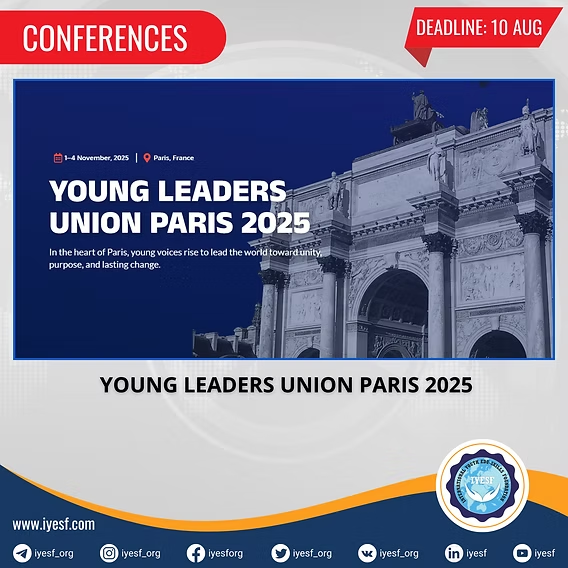
Young Leaders Union Conference 2025 in Paris (Fully Funded)
Join Global Changemakers in Paris! Fully Funded International Conference for Students, Professionals, and Social Leaders from All Nationalities and Fields

Yer yürəsinin daxili nüvəsində struktur dəyişiklikləri aşkar edilib
bu nəzəriyyənin doğru olmadığı məlum olub. Seismik dalğalar vasitəsilə aparılan tədqiqatda daxili nüvənin səthindəki dəyişikliklərə dair qeyri-adi məlumatlar əldə edilib.

Lester B Pearson Scholarship 2026 in Canada (Fully Funded)
Applications are now open for the Lester B Pearson Scholarship 2026 at the University of Toronto!