
Applying to KAUST - Your Complete Guide for Masters & Ph.D. Programs (Upcoming Admissions)
Admissions Overview & Key Requirements

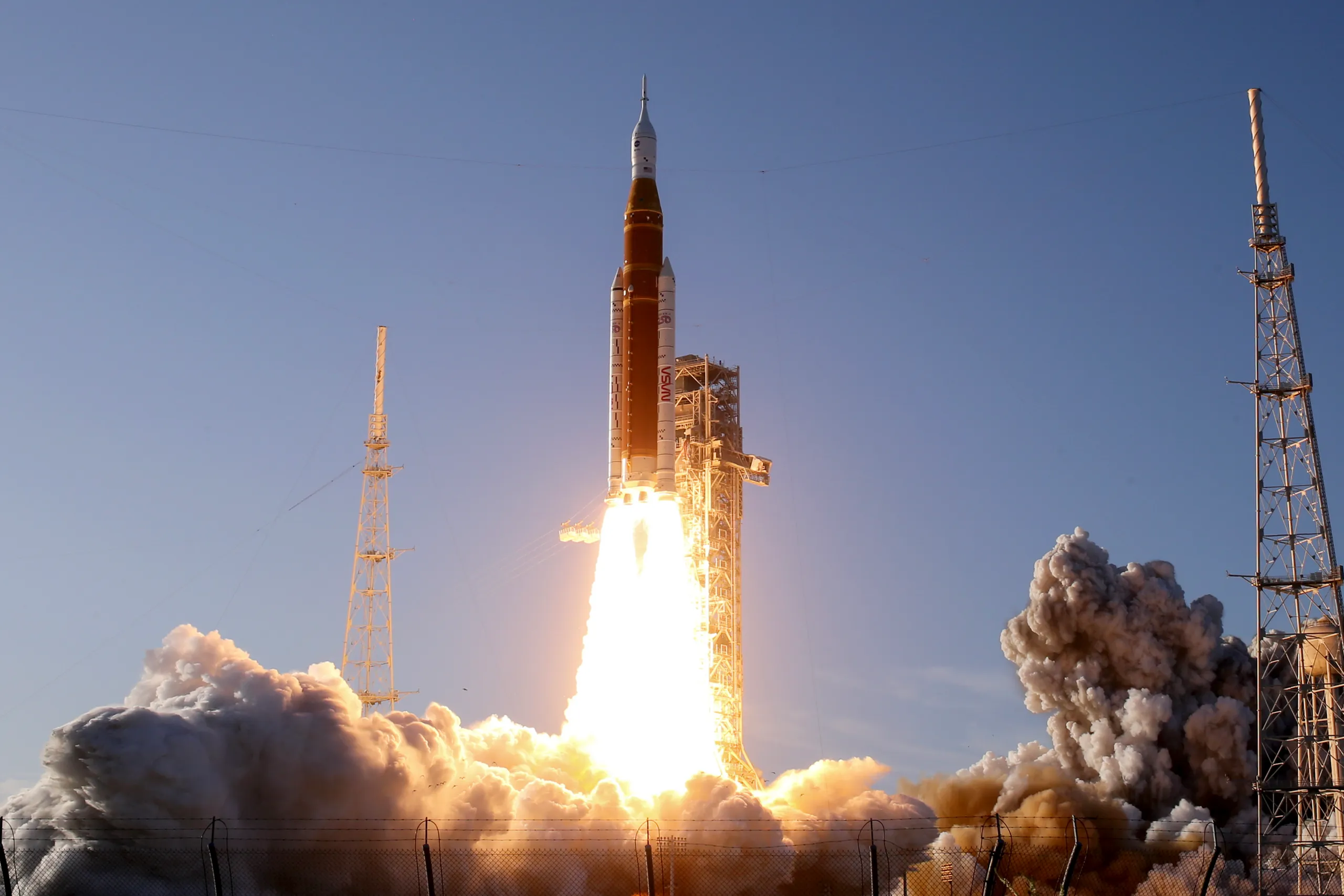
The mission launched from Kennedy Space Center in Florida at 18:35 local time. The four-member crew — Reid Wiseman, Victor Glover, Christina Koch and Jeremy Hansen — will not land on the Moon but instead fly around it, paving the way for future lunar landings, according to the BBC.
The approximately 10-day mission is the first crewed test of NASA’s Space Launch System (SLS) rocket and Orion spacecraft capsule. Its main objective is to test critical systems needed for upcoming Moon missions.
The launch had previously been delayed several times due to technical issues. Problems were identified in the flight termination system and the battery of the Launch Abort System, as well as hydrogen and helium leaks. After liftoff, a brief communication issue meant ground control could not hear the astronauts, and a toilet malfunction was also reported, though both issues were later resolved, according to the BBC.
During ascent, the rocket’s boosters separated after helping the spacecraft reach high speeds. The crew then crossed the Kármán line — the boundary between Earth’s atmosphere and space — officially entering orbit. Commander Reid Wiseman described the view as “amazing.”
During the mission, astronauts will test Orion’s maneuverability, life-support, propulsion, power, and navigation systems. They will also conduct experiments, send back images and data from deep space, and serve as test subjects in microgravity conditions, according to the BBC.
Artemis II does not include a Moon landing. Instead, it is a preparatory mission for future flights, including Artemis III and Artemis IV. NASA aims to test landing systems with Artemis III in 2027 and carry out a crewed lunar landing near the Moon’s south pole with Artemis IV in 2028.
NASA is also working with commercial partners for future lunar landings, including SpaceX Starship and Blue Origin lunar lander.
The last crewed Moon mission was Apollo 17 in 1972. The Artemis program aims to establish a long-term human presence on the Moon and prepare for future missions to Mars.
Other countries are also advancing their lunar ambitions. China plans a crewed landing near the Moon’s south pole by 2030, while India aims to send astronauts by around 2040 following the success of Chandrayaan-3.
Future phases of Artemis are expected to focus on building lunar infrastructure, including a base and expanded international collaboration.
Share
Applying to KAUST - Your Complete Guide for Masters & Ph.D. Programs (Upcoming Admissions)
Admissions Overview & Key Requirements

An mRNA cancer vaccine may offer long-term protection
A small clinical trial suggests the treatment could help keep pancreatic cancer from returning

Registration Opens for SAF 2025: International STEAM Azerbaijan Festival Welcomes Global Youth
The International STEAM Azerbaijan Festival (SAF) has officially opened registration for its 2025 edition!

Young Leaders Union Conference 2025 in Paris (Fully Funded)
Join Global Changemakers in Paris! Fully Funded International Conference for Students, Professionals, and Social Leaders from All Nationalities and Fields

Yer yürəsinin daxili nüvəsində struktur dəyişiklikləri aşkar edilib
bu nəzəriyyənin doğru olmadığı məlum olub. Seismik dalğalar vasitəsilə aparılan tədqiqatda daxili nüvənin səthindəki dəyişikliklərə dair qeyri-adi məlumatlar əldə edilib.

Lester B Pearson Scholarship 2026 in Canada (Fully Funded)
Applications are now open for the Lester B Pearson Scholarship 2026 at the University of Toronto!