Applying to KAUST - Your Complete Guide for Masters & Ph.D. Programs (Upcoming Admissions)
Admissions Overview & Key Requirements

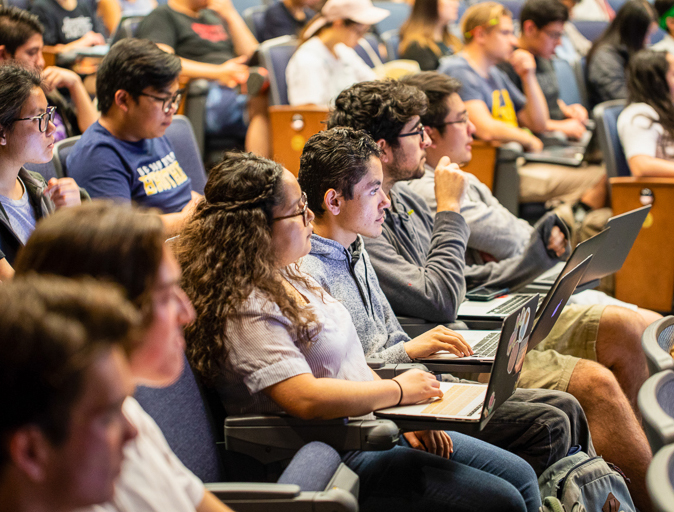
Students/ File: UC Berkeley
According to Reuters, Tbilisi, April 15 (Reuters) — When anti-government demonstrations started in Georgia in late 2024, Luka Mishveladze began sleeping on the floor of his university building so he could stay close to student protests.
Around 18 months later, the 20-year-old student has become one of the protest organisers. He is now demonstrating outside the same building in Tbilisi against government higher education reforms that could lead to the closure of his university.
“It was difficult for me to accept that this was really happening, that I was losing my university, the place I considered home,” Mishveladze told Reuters.
Once viewed by Western countries as a rising democracy moving quickly toward European Union membership and away from Russian influence, Georgia is now increasingly distancing itself from the West and strengthening relations with Moscow.
“ONE FACULTY, ONE CITY”
The ruling Georgian Dream party says the university reforms, which involve funding changes and moving faculties to different locations, are meant to better match labour market needs and support regional universities.
The government says it wants to reduce what it describes as the excessive concentration of universities in Tbilisi and prevent the wasteful use of resources.
Critics argue that these reforms are another sign that the government is pushing the country away from the West, more than thirty years after Georgia became independent from the Soviet Union.
Under the policy known as “one faculty, one city,” only one university in each city will be allowed to offer certain degree programmes.
The government will also decide which subjects can be taught at the country’s 19 public universities, where more than half of Georgia’s students study, and it will redistribute student admission quotas.
Tbilisi’s Ilia State University (ISU), where Mishveladze and around 17,300 other students study, is expected to suffer heavily from the changes. Considered one of Georgia’s leading research universities, it is known for its liberal views and strong partnerships with European institutions.
ISU says more than 90% of its programmes will be removed, and the university may have to close within three years. This autumn, it will only be able to admit 335 new undergraduate students, compared with 3,770 last year.
“No other field in Georgia has been as connected to Europe as higher education. They are destroying it,” said ISU Chancellor Ketevan Darakhvelidze.
“The more isolated Georgia becomes, the better it is for the government.”
Share
Applying to KAUST - Your Complete Guide for Masters & Ph.D. Programs (Upcoming Admissions)
Admissions Overview & Key Requirements

An mRNA cancer vaccine may offer long-term protection
A small clinical trial suggests the treatment could help keep pancreatic cancer from returning

Registration Opens for SAF 2025: International STEAM Azerbaijan Festival Welcomes Global Youth
The International STEAM Azerbaijan Festival (SAF) has officially opened registration for its 2025 edition!
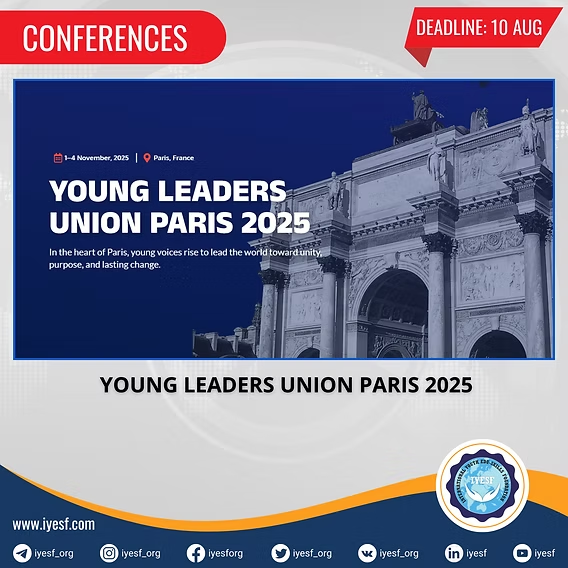
Young Leaders Union Conference 2025 in Paris (Fully Funded)
Join Global Changemakers in Paris! Fully Funded International Conference for Students, Professionals, and Social Leaders from All Nationalities and Fields

Yer yürəsinin daxili nüvəsində struktur dəyişiklikləri aşkar edilib
bu nəzəriyyənin doğru olmadığı məlum olub. Seismik dalğalar vasitəsilə aparılan tədqiqatda daxili nüvənin səthindəki dəyişikliklərə dair qeyri-adi məlumatlar əldə edilib.

Lester B Pearson Scholarship 2026 in Canada (Fully Funded)
Applications are now open for the Lester B Pearson Scholarship 2026 at the University of Toronto!