Applying to KAUST - Your Complete Guide for Masters & Ph.D. Programs (Upcoming Admissions)
Admissions Overview & Key Requirements


The OECD’s Teaching and Learning International Survey (TALIS) 2024 paints a detailed picture of the shifting landscape within global education. Despite recent challenges, teachers remain committed and resilient—almost 90% report job satisfaction, and in countries like Vietnam, over 92% feel valued by society.
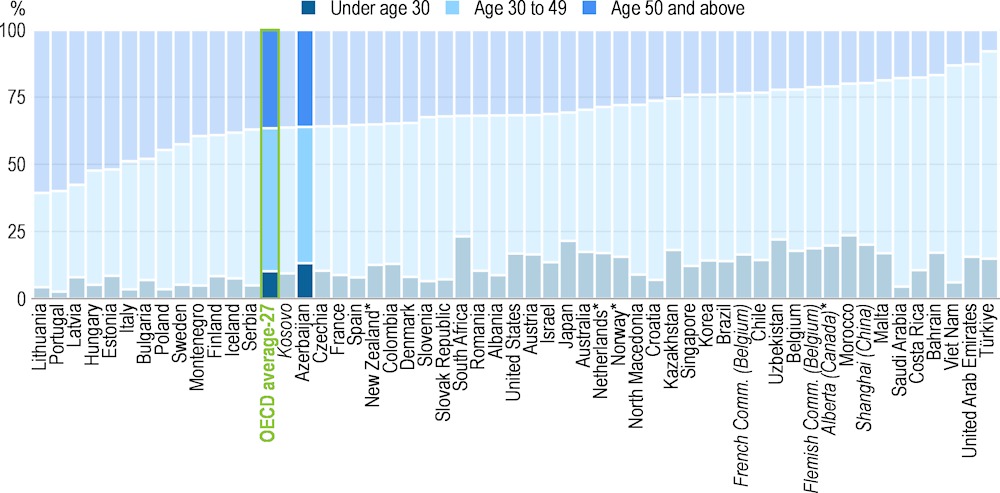
One of the most pressing issues highlighted by TALIS 2024 is the aging teacher workforce. On average, teachers are now 45 years old across the OECD, with certain countries such as Lithuania and Portugal reporting an average age of 51 and 50, respectively. More than half of teachers in Estonia, Hungary, Latvia, Lithuania, and Portugal are over 50, posing future staffing challenges as many approach retirement. Meanwhile, some countries boast younger teachers. In Turkey, Morocco, and Uzbekistan, around 20% or more of teachers are under 30, emphasizing different professional development needs.
To address workforce shortages, nations are actively recruiting from other sectors and streamlining pathways for mid-career professionals to enter teaching. For example, in Iceland, around 21% of teachers are second-career professionals, while in Australia, this figure is approximately 17%. These systems promote quick entry into the classroom through specialized training programs.
The survey shows a positive trend toward greater collaboration among teachers globally. Teachers now spend more time working in teams and sharing resources than in previous years—especially in countries like Slovenia, Brazil, and South Africa, where collaboration hours have increased significantly.
Experienced teachers with high self-efficacy are vital in fostering professional growth. For instance, in Shanghai, over 63% of high-scoring teachers exchange teaching materials, more than twice as often as those with lower self-efficacy. Mentorship programs are also expanding, with nearly 79% of novice teachers in Shanghai reporting having dedicated mentors, which helps to boost skills and confidence in early teaching careers.
Despite these advancements, many teachers face high workloads. Teachers in Japan work approximately 55 hours weekly, reflecting ongoing efforts to balance workload and well-being. The survey highlights that teachers in systems with large refugee populations—like Czechia, Estonia, and Lithuania—are increasingly managing classrooms with high numbers of students who are non-native speakers or refugees. Teachers report using classroom management techniques more frequently, such as calming disruptive students and enforcing rules, to address these diverse challenges.
A standout finding from TALIS 2024 is the rapid integration of artificial intelligence (AI) tools. Countries such as Singapore and the United Arab Emirates are leading in this area, with roughly 75% of teachers using AI—coaching, generating lesson plans, or reviewing student data. Teachers in these systems are also more likely to receive professional development related to AI, positioning them at the forefront of educational innovation.
In contrast, AI usage remains limited in countries like France and Japan, where fewer than 20% of teachers have adopted such technologies. Nonetheless, the trend indicates a global shift toward leveraging digital tools to improve teaching efficiency and effectiveness.
As the education landscape evolves with population aging, technological advances, and increasing diversity, TALIS 2024 underscores the importance of supporting teachers through targeted policies. Countries that promote professional collaboration, streamline pathways into teaching, and invest in new technologies will be best positioned to prepare the next generation of learners for a rapidly changing world.
Share
Applying to KAUST - Your Complete Guide for Masters & Ph.D. Programs (Upcoming Admissions)
Admissions Overview & Key Requirements

An mRNA cancer vaccine may offer long-term protection
A small clinical trial suggests the treatment could help keep pancreatic cancer from returning

Registration Opens for SAF 2025: International STEAM Azerbaijan Festival Welcomes Global Youth
The International STEAM Azerbaijan Festival (SAF) has officially opened registration for its 2025 edition!
Young Leaders Union Conference 2025 in Paris (Fully Funded)
Join Global Changemakers in Paris! Fully Funded International Conference for Students, Professionals, and Social Leaders from All Nationalities and Fields

Yer yürəsinin daxili nüvəsində struktur dəyişiklikləri aşkar edilib
bu nəzəriyyənin doğru olmadığı məlum olub. Seismik dalğalar vasitəsilə aparılan tədqiqatda daxili nüvənin səthindəki dəyişikliklərə dair qeyri-adi məlumatlar əldə edilib.

Lester B Pearson Scholarship 2026 in Canada (Fully Funded)
Applications are now open for the Lester B Pearson Scholarship 2026 at the University of Toronto!