Applying to KAUST - Your Complete Guide for Masters & Ph.D. Programs (Upcoming Admissions)
Admissions Overview & Key Requirements

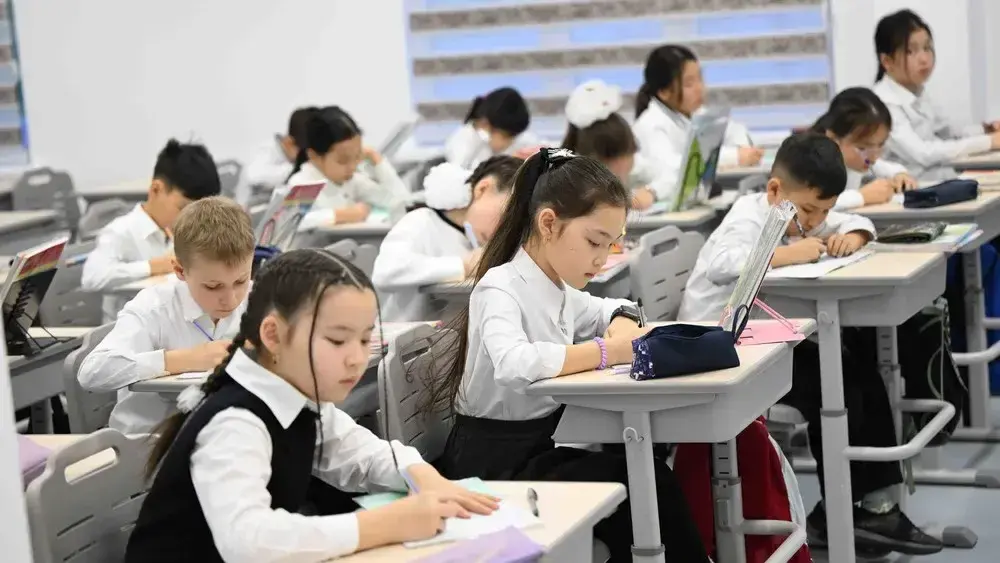
Kazakhstan is preparing to tighten regulations on private schools following the discovery of widespread legal violations in the sector. The announcement was made by Minister of Education Zhuldyz Suleimenova during a meeting with founders and directors of private schools in Almaty, where she emphasized the government’s intention to strengthen oversight and ensure greater transparency.
According to the minister, new private schools will be permitted to open only in regions where there is a demonstrable need for additional educational facilities. Licenses will be issued exclusively to institutions intended to replace overcrowded three-shift public schools, facilities in emergency condition or areas facing a shortage of state educational institutions.
At the same time, the obligations of private school founders will become more stringent, making them directly responsible for educational quality, teacher qualifications, and the safety and well-being of students. The process for appointing school principals will also be revised, and such decisions will no longer rest solely with school founders but will require mandatory approval from the Ministry of Education and local authorities.
Official data indicate that Kazakhstan currently has 890 licensed private schools, 785 of which have already transitioned their documentation into digital format. The government is also considering a moratorium on placing state-funded educational orders in newly established private schools, a measure aimed at improving transparency and strengthening quality control across the private education sector.
The move follows a series of inspections conducted at the end of 2025, when authorities uncovered extensive irregularities. Out of 745 inspected schools, 155 were found to have hidden income, while nearly a third of institutions did not correspond to their declared purpose. In dozens of cases, student populations were exaggerated by as much as two to three times their actual capacity. In one striking example, a school in Astana with a capacity of 241 seats had registered 1,003 students. Inspectors also identified fictitious teachers, instances of double financing and manipulated reporting.
These findings have also prompted renewed scrutiny at the highest levels of government. Earlier this month, during a government meeting, Prime Minister Olzhas Bektenov called for a reassessment of subsidies for private schools and medical organizations, arguing that excessive financing must end. “If a business cannot operate under conditions of fair competition, then we must ask whether such a business is necessary at all. Fraud in this sector is no secret to anyone,” he stated.
Share
Applying to KAUST - Your Complete Guide for Masters & Ph.D. Programs (Upcoming Admissions)
Admissions Overview & Key Requirements

An mRNA cancer vaccine may offer long-term protection
A small clinical trial suggests the treatment could help keep pancreatic cancer from returning

Registration Opens for SAF 2025: International STEAM Azerbaijan Festival Welcomes Global Youth
The International STEAM Azerbaijan Festival (SAF) has officially opened registration for its 2025 edition!
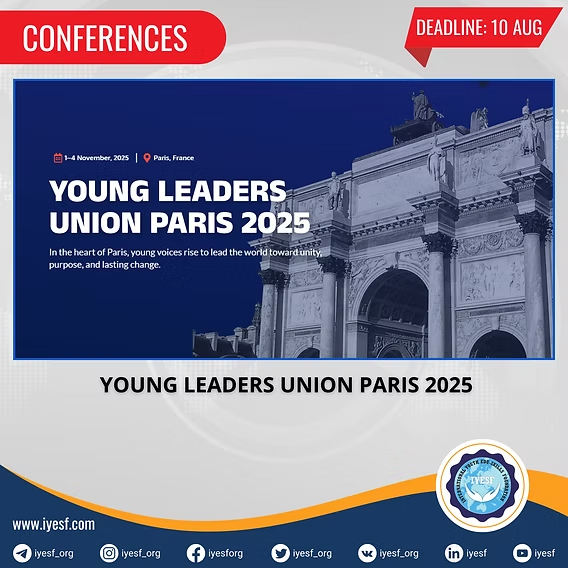
Young Leaders Union Conference 2025 in Paris (Fully Funded)
Join Global Changemakers in Paris! Fully Funded International Conference for Students, Professionals, and Social Leaders from All Nationalities and Fields

Yer yürəsinin daxili nüvəsində struktur dəyişiklikləri aşkar edilib
bu nəzəriyyənin doğru olmadığı məlum olub. Seismik dalğalar vasitəsilə aparılan tədqiqatda daxili nüvənin səthindəki dəyişikliklərə dair qeyri-adi məlumatlar əldə edilib.

Lester B Pearson Scholarship 2026 in Canada (Fully Funded)
Applications are now open for the Lester B Pearson Scholarship 2026 at the University of Toronto!