
Applying to KAUST - Your Complete Guide for Masters & Ph.D. Programs (Upcoming Admissions)
Admissions Overview & Key Requirements

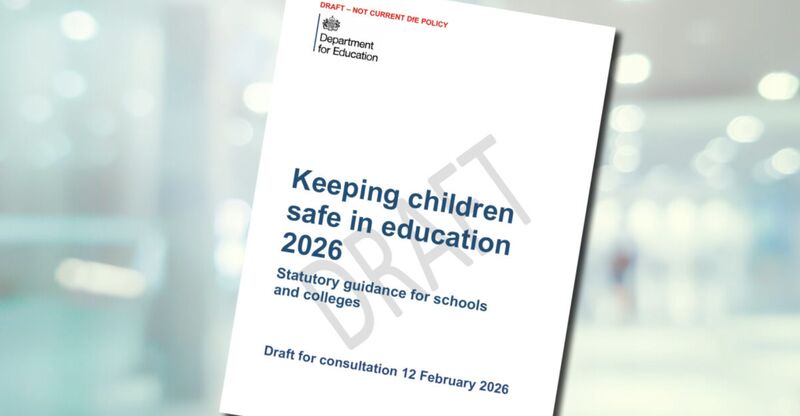
Schools must report concerns about a pupil carrying a weapon and review the effectiveness of internet filtering systems at least annually, the draft guidance states.
The Department for Education is consulting on the draft “Keeping Children Safe in Education” guidance until April. If approved, the document will become legally binding.
The draft includes a new section on children questioning their gender and advises schools to take a “very careful approach” to social transition. It also sets out several other significant proposals.
The guidance introduces a dedicated section on how to support children questioning their gender.
Under the proposals, schools should not initiate social transition and must approach the issue with particular caution, involving parents in the vast majority of cases. Extra care is advised in primary schools.
The draft also makes clear there should be no exceptions to single-sex facilities in schools, including toilets and changing rooms. However, schools are expected to explain these rules sensitively to children who are socially transitioning.
Staff must report concerns about a pupil carrying a weapon, using one, or expressing intent to use one to the designated safeguarding lead (DSL).
The DSL is required to assess the risk and take appropriate action, which may include steps to de-escalate conflicts between pupils.
The guidance reiterates that all staff should be able to recognise indicators that a child may be involved in serious violence, noting that risks are higher among children with disrupted education.
It stresses the importance of early, evidence-based support for those considered at risk, including access to trusted adults, help to develop social and emotional skills, and targeted interventions such as mentoring or therapeutic support.
The draft makes clear that mental health problems can, in some cases, develop into safeguarding concerns, including self-harm or suicide risk.
Previous guidance stated that mental health issues may indicate a child has suffered, or is at risk of suffering, abuse, neglect or exploitation, and emphasised that only medical professionals can make diagnoses.
Schools will be required to regularly review the effectiveness of filtering and monitoring systems on school devices, at least once every academic year.
Earlier guidance required monitoring of such systems but did not specify a timeframe.
The draft updates the categories of child-on-child abuse to reflect technological developments.
This includes the consensual and non-consensual sharing of self-generated intimate images or videos, including content created using artificial intelligence, such as deepfakes.
It also states that misogyny is a form of harmful sexual behaviour, alongside sexual violence and harassment.
The guidance provides further detail on “Operation Encompass”, under which police must inform a child’s school if they believe the child may have been exposed to domestic abuse.
Police are expected to share the child’s name and key details, their relationship to the victim or alleged perpetrator, a police reference number, details of the incident and the “voice of the child” – what they are saying and how they are behaving.
Schools must comply with data protection laws when handling this sensitive information.
The draft reiterates stricter expectations around mobile phone use announced last month.
It states that all schools should be mobile phone-free environments “by default”, with any exceptions kept to a minimum.
Existing advice already makes clear that the department expects schools to implement policies preventing pupils from accessing mobile phones throughout the school day, including during lessons, between lessons, and at break and lunchtime.
Share
Applying to KAUST - Your Complete Guide for Masters & Ph.D. Programs (Upcoming Admissions)
Admissions Overview & Key Requirements

An mRNA cancer vaccine may offer long-term protection
A small clinical trial suggests the treatment could help keep pancreatic cancer from returning

Registration Opens for SAF 2025: International STEAM Azerbaijan Festival Welcomes Global Youth
The International STEAM Azerbaijan Festival (SAF) has officially opened registration for its 2025 edition!
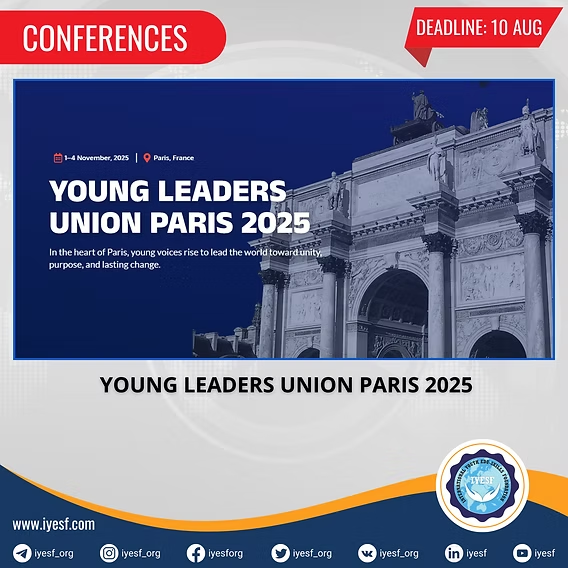
Young Leaders Union Conference 2025 in Paris (Fully Funded)
Join Global Changemakers in Paris! Fully Funded International Conference for Students, Professionals, and Social Leaders from All Nationalities and Fields

Yer yürəsinin daxili nüvəsində struktur dəyişiklikləri aşkar edilib
bu nəzəriyyənin doğru olmadığı məlum olub. Seismik dalğalar vasitəsilə aparılan tədqiqatda daxili nüvənin səthindəki dəyişikliklərə dair qeyri-adi məlumatlar əldə edilib.

Lester B Pearson Scholarship 2026 in Canada (Fully Funded)
Applications are now open for the Lester B Pearson Scholarship 2026 at the University of Toronto!