
Applying to KAUST - Your Complete Guide for Masters & Ph.D. Programs (Upcoming Admissions)
Admissions Overview & Key Requirements

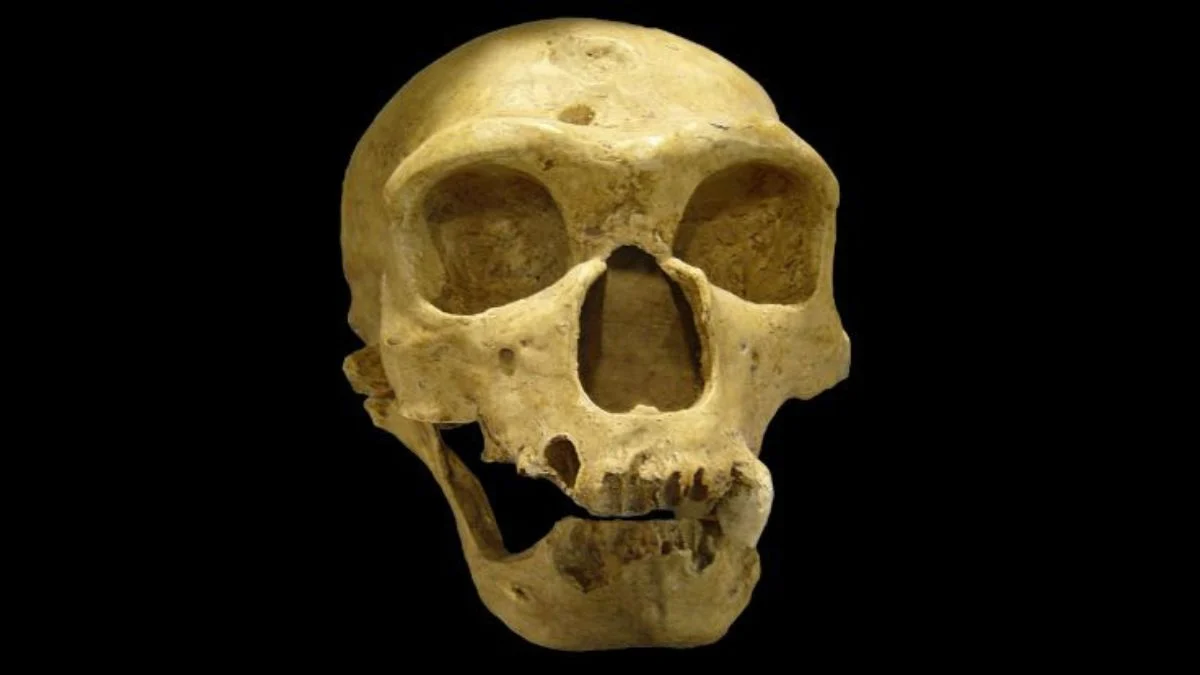
Neanderthal skull discovered in 1908 in France/ File: Science Alert
According to Science alert, in 1857, German anatomist Hermann Schaaffhausen examined a strange human fossil discovered a year earlier in the Neander Valley near Düsseldorf. He described the skull as belonging to a being at a “lower stage of development,” a judgment that shaped scientific thinking for more than a century.
Today, that assumption is being reconsidered. A team of international anthropologists has found evidence suggesting that Neanderthals were not cognitively inferior to modern humans. By comparing brain scans from populations in the United States and China, researchers discovered that variations within modern human brains are actually greater than the differences between humans and Neanderthals.
The findings indicate that the structural differences between Neanderthal and modern human brains are relatively small. Researchers argue that if such differences were considered significant for evolution or intelligence, then similar variations within modern human populations would also need to be seen as meaningful, something current science does not support. In fact, existing research shows that cognitive ability in modern humans is only weakly linked, if at all, to brain anatomy. This undermines the long-standing theory that humans outlived Neanderthals because of superior intelligence.
When Schaaffhausen first published his conclusions in the mid-19th century, there was little evidence that humanity extended beyond 6,000 years. His work also came before Charles Darwin’s groundbreaking book On the Origin of Species, which would later transform understanding of evolution.
Modern archaeological discoveries paint a very different picture of Neanderthals. Evidence suggests they engaged in complex behaviors such as diving for shellfish, making fire, producing adhesives and medicinal substances, sewing clothing, and even creating abstract art. In many cases, Neanderthals practiced these skills long before modern humans.
Some fossil evidence also hints that Neanderthals may have had the capacity for speech, though proving this remains difficult. Meanwhile, recent studies of their skeletal structure suggest they stood upright, challenging the outdated image of hunched, primitive cave dwellers.
Increasingly, scientists are also reconsidering whether Neanderthals truly went extinct. Genetic evidence shows that modern humans and Neanderthals interbred for thousands of years, meaning many people today still carry Neanderthal DNA. Some researchers even argue that Neanderthals may have been close enough to modern humans to be considered part of the same species. Taken together, the findings suggest that Neanderthals were not a lesser form of human, but rather close relatives whose story is far more intertwined with our own than once believed.
Share
Applying to KAUST - Your Complete Guide for Masters & Ph.D. Programs (Upcoming Admissions)
Admissions Overview & Key Requirements

An mRNA cancer vaccine may offer long-term protection
A small clinical trial suggests the treatment could help keep pancreatic cancer from returning

Registration Opens for SAF 2025: International STEAM Azerbaijan Festival Welcomes Global Youth
The International STEAM Azerbaijan Festival (SAF) has officially opened registration for its 2025 edition!

Young Leaders Union Conference 2025 in Paris (Fully Funded)
Join Global Changemakers in Paris! Fully Funded International Conference for Students, Professionals, and Social Leaders from All Nationalities and Fields

Yer yürəsinin daxili nüvəsində struktur dəyişiklikləri aşkar edilib
bu nəzəriyyənin doğru olmadığı məlum olub. Seismik dalğalar vasitəsilə aparılan tədqiqatda daxili nüvənin səthindəki dəyişikliklərə dair qeyri-adi məlumatlar əldə edilib.

Lester B Pearson Scholarship 2026 in Canada (Fully Funded)
Applications are now open for the Lester B Pearson Scholarship 2026 at the University of Toronto!