
Applying to KAUST - Your Complete Guide for Masters & Ph.D. Programs (Upcoming Admissions)
Admissions Overview & Key Requirements

the logo/file:Ocean Country College
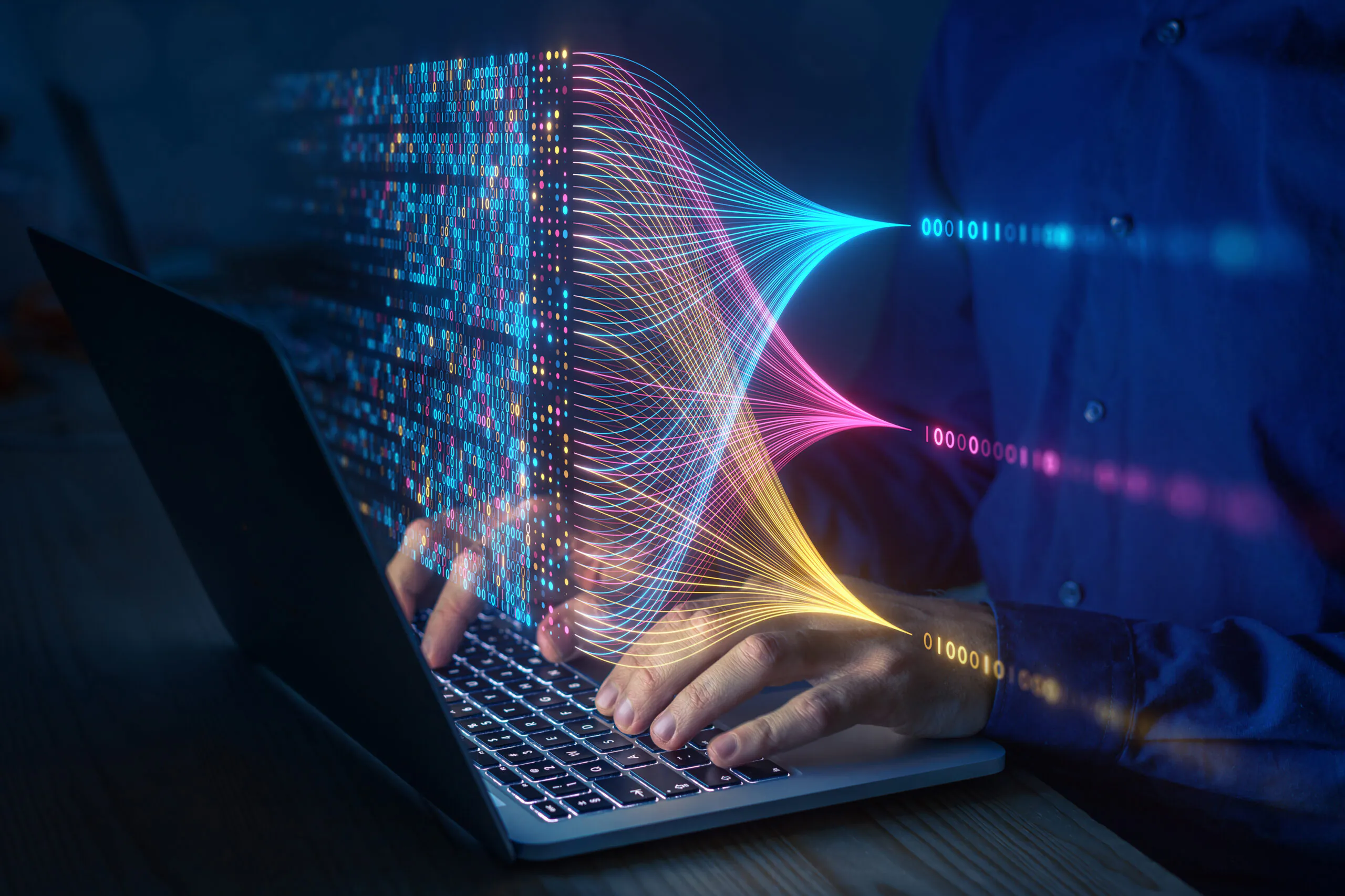
According to Science News, Boston - and California-based companies Lightelligence and Lightmatter have unveiled computer components that use laser light, or photonics, to perform computations, potentially transforming how AI and other high-performance computing tasks are handled. Published in Nature, these devices represent a significant advance over conventional electronic chips.
Unlike typical computers, which convert light signals into slower electronic ones before performing calculations, the new devices use light itself to conduct math. Both Lightelligence and Lightmatter focus on matrix multiplication, a key operation in AI models and many other computational tasks. Other computations are still handled electronically.
The development comes at a critical time as AI models grow in complexity and traditional chip technology hits physical limits. Moore’s Law, the historic trend of doubling transistor density roughly every two years, has slowed, constraining the performance improvements of conventional electronic chips. Photonic computing offers a new path forward.
Lightelligence’s device, called PACE, integrates photonic and electronic chips to optimize computation for industries such as finance, manufacturing, and logistics. Lightmatter’s processor, meanwhile, combines four photonic and two electronic chips to handle general-purpose AI workloads, including large language models like those behind ChatGPT, as well as deep learning tasks like playing Atari games.
One major hurdle for photonic processors has been accuracy. Light signals can represent a wide range of values beyond simple 1s and 0s, which can amplify small errors. Lightelligence leverages controlled randomness to improve optimization problem-solving, while Lightmatter mitigates errors by layering electronic chips atop photonic components to regulate data.
“This is not a lab prototype,” said Lightmatter CEO Nick Harris. “This is a new type of computer, and it’s here.”
Experts say the devices can be manufactured using existing semiconductor factories, which could enable rapid scaling. Photonic chips may appear in commercial data centers within five years, offering faster, energy-efficient alternatives for AI and other computation-heavy applications.
Share
Applying to KAUST - Your Complete Guide for Masters & Ph.D. Programs (Upcoming Admissions)
Admissions Overview & Key Requirements

An mRNA cancer vaccine may offer long-term protection
A small clinical trial suggests the treatment could help keep pancreatic cancer from returning

Registration Opens for SAF 2025: International STEAM Azerbaijan Festival Welcomes Global Youth
The International STEAM Azerbaijan Festival (SAF) has officially opened registration for its 2025 edition!

Young Leaders Union Conference 2025 in Paris (Fully Funded)
Join Global Changemakers in Paris! Fully Funded International Conference for Students, Professionals, and Social Leaders from All Nationalities and Fields

Yer yürəsinin daxili nüvəsində struktur dəyişiklikləri aşkar edilib
bu nəzəriyyənin doğru olmadığı məlum olub. Seismik dalğalar vasitəsilə aparılan tədqiqatda daxili nüvənin səthindəki dəyişikliklərə dair qeyri-adi məlumatlar əldə edilib.

Lester B Pearson Scholarship 2026 in Canada (Fully Funded)
Applications are now open for the Lester B Pearson Scholarship 2026 at the University of Toronto!