Applying to KAUST - Your Complete Guide for Masters & Ph.D. Programs (Upcoming Admissions)
Admissions Overview & Key Requirements

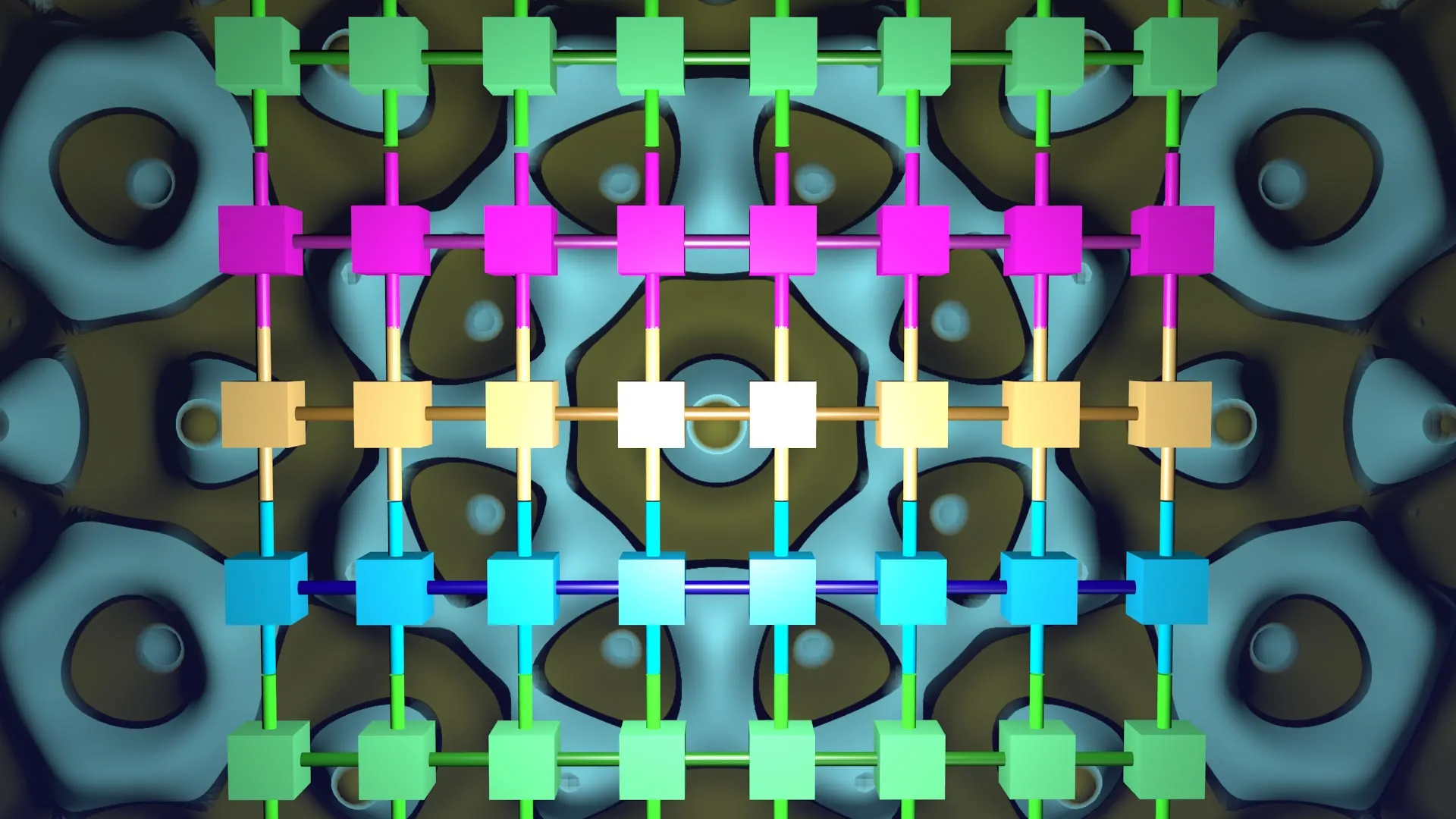
Quantum/ File: Science daily
According to Science daily, quantum computers and next-generation quantum technologies rely on special quantum materials that show unusual behavior under specific conditions. By carefully adjusting the structure of these materials, scientists can sometimes generate entirely new quantum properties. One well-known example is graphene: when several layers are stacked and slightly twisted into a moiré pattern, the material can suddenly become superconducting.
Researchers are now designing even more complex structures, such as quasicrystals and super-moiré materials. However, predicting how these advanced materials behave is extremely difficult. Because quasicrystals are mathematically highly complex, simulating them can require calculations involving more than a quadrillion numbers - far beyond the capacity of today’s most powerful supercomputers.
Scientists at Aalto University’s Department of Applied Physics have created a new quantum-inspired algorithm that can handle these extremely large, non-periodic quantum materials almost instantly. Assistant Professor Jose Lado explains that the work shows how quantum technologies can also be used to advance themselves.
This breakthrough could eventually enable dissipationless electronics - systems that conduct electricity without any energy loss. Such technology could significantly reduce the growing energy demands and heat generation of AI-based data centers.
The research team included doctoral researcher Tiago Antão (lead author), QDOC researcher Yitao Sun, and Academy Research Fellow Adolfo Fumega. Their results were published in Physical Review Letters as an Editor’s Suggestion.
The researchers focused on topological quasicrystals, rare materials that produce unusual quantum excitations. These excitations are important because they help maintain electrical conductivity by protecting it from noise and interference. However, they are unevenly distributed across the already highly complex structure of quasicrystals.
Instead of calculating the full material directly, the team reformulated the problem using methods inspired by quantum computing technique
Share
Applying to KAUST - Your Complete Guide for Masters & Ph.D. Programs (Upcoming Admissions)
Admissions Overview & Key Requirements

An mRNA cancer vaccine may offer long-term protection
A small clinical trial suggests the treatment could help keep pancreatic cancer from returning

Registration Opens for SAF 2025: International STEAM Azerbaijan Festival Welcomes Global Youth
The International STEAM Azerbaijan Festival (SAF) has officially opened registration for its 2025 edition!
Young Leaders Union Conference 2025 in Paris (Fully Funded)
Join Global Changemakers in Paris! Fully Funded International Conference for Students, Professionals, and Social Leaders from All Nationalities and Fields

Yer yürəsinin daxili nüvəsində struktur dəyişiklikləri aşkar edilib
bu nəzəriyyənin doğru olmadığı məlum olub. Seismik dalğalar vasitəsilə aparılan tədqiqatda daxili nüvənin səthindəki dəyişikliklərə dair qeyri-adi məlumatlar əldə edilib.

Lester B Pearson Scholarship 2026 in Canada (Fully Funded)
Applications are now open for the Lester B Pearson Scholarship 2026 at the University of Toronto!