
Applying to KAUST - Your Complete Guide for Masters & Ph.D. Programs (Upcoming Admissions)
Admissions Overview & Key Requirements

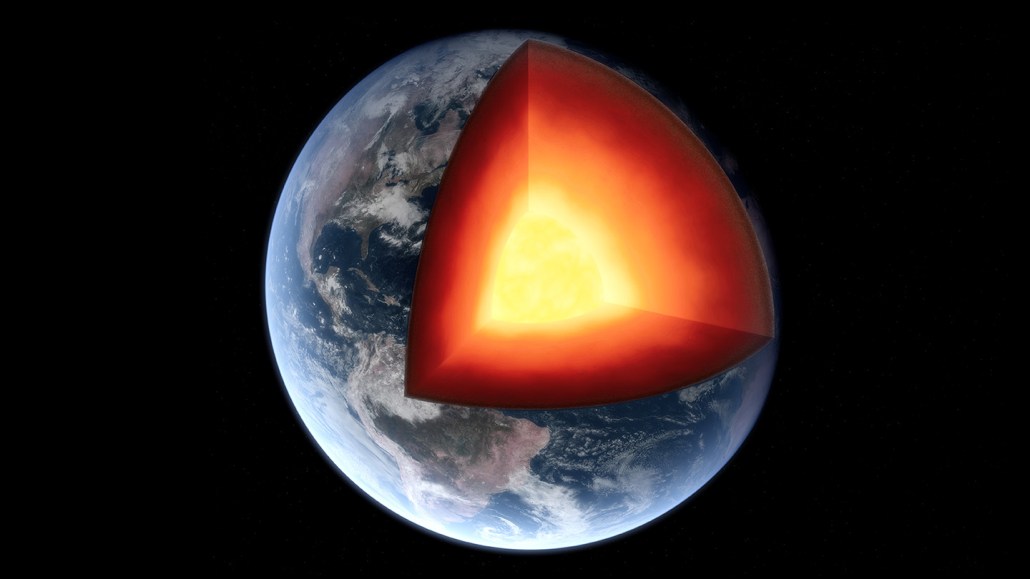
Imagine all of Earth’s oceans, which cover nearly 70% of the planet’s surface. Now multiply that volume several times over. Scientists estimate that Earth’s core may contain the equivalent of at least nine, and possibly up to 45, oceans’ worth of hydrogen — making it the largest hydrogen reservoir on the planet.
According to the study, hydrogen may account for roughly 0.36% to 0.7% of the total mass of Earth’s core. The findings were published in the journal Nature Communications.
According to the CNN, More than 4.6 billion years ago, Earth began forming from collisions of gas, dust, and rocky debris orbiting the Sun. Over time, these impacts shaped the planet’s internal layers — the core, mantle, and crust. Deep beneath the surface, under extreme pressure and heat, a dense metallic core primarily composed of iron and nickel developed. This churning metal interior generates Earth’s protective magnetic field.
Understanding how hydrogen is stored and distributed inside the planet is essential for explaining planetary formation and the origins of life. However, the core lies far beyond direct observation, and recreating its immense pressure conditions in laboratory settings remains a major scientific challenge.
Because hydrogen is the lightest and smallest chemical element, accurately measuring its presence is particularly difficult. Earlier studies relied on analyzing iron crystal structures through X-ray diffraction methods, but the estimated amounts varied widely.
In the new research, scientists applied a different approach. They simulated core-like temperatures and pressures by melting iron with lasers inside a diamond anvil cell. Using atom probe tomography, they examined the material at the atomic level, producing three-dimensional measurements of its chemical composition.
The experiments revealed how hydrogen interacts with silicon and oxygen within iron under extreme conditions. Researchers observed that hydrogen and silicon appeared in roughly equal proportions in their samples. By combining these results with previous estimates of silicon in the core, they calculated a revised estimate for hydrogen content.
Scientists caution that uncertainties remain and further studies will be needed to refine the calculations. Some experts suggest that the actual amount of hydrogen in Earth’s core could be even higher.
If confirmed, the findings would support the idea that much of Earth’s hydrogen was incorporated during the planet’s earliest stages of formation rather than delivered later by comets. Hydrogen, together with carbon, nitrogen, oxygen, sulfur, and phosphorus, is one of the fundamental elements necessary for life. The study may therefore reshape discussions about how Earth became a habitable world.
Share
Applying to KAUST - Your Complete Guide for Masters & Ph.D. Programs (Upcoming Admissions)
Admissions Overview & Key Requirements

An mRNA cancer vaccine may offer long-term protection
A small clinical trial suggests the treatment could help keep pancreatic cancer from returning

Registration Opens for SAF 2025: International STEAM Azerbaijan Festival Welcomes Global Youth
The International STEAM Azerbaijan Festival (SAF) has officially opened registration for its 2025 edition!

Young Leaders Union Conference 2025 in Paris (Fully Funded)
Join Global Changemakers in Paris! Fully Funded International Conference for Students, Professionals, and Social Leaders from All Nationalities and Fields

Yer yürəsinin daxili nüvəsində struktur dəyişiklikləri aşkar edilib
bu nəzəriyyənin doğru olmadığı məlum olub. Seismik dalğalar vasitəsilə aparılan tədqiqatda daxili nüvənin səthindəki dəyişikliklərə dair qeyri-adi məlumatlar əldə edilib.

Lester B Pearson Scholarship 2026 in Canada (Fully Funded)
Applications are now open for the Lester B Pearson Scholarship 2026 at the University of Toronto!