
Applying to KAUST - Your Complete Guide for Masters & Ph.D. Programs (Upcoming Admissions)
Admissions Overview & Key Requirements

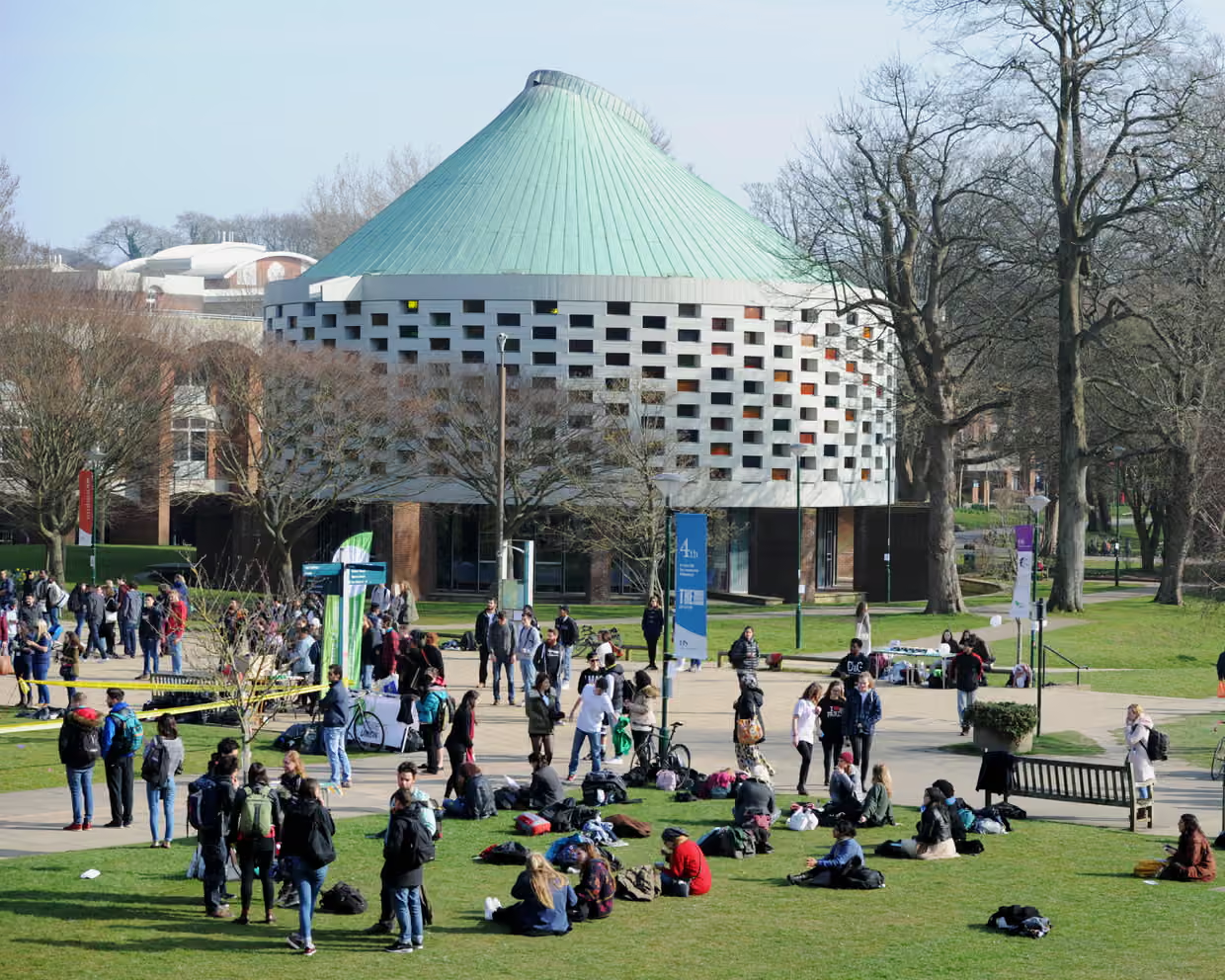
The UK government has unveiled a major shift in its international education policy, scrapping numerical targets for foreign students studying in the UK and replacing them with an ambition to expand British education overseas.
Under the new International Education Strategy (IES), ministers aim to grow UK “education exports” to £40bn a year by 2030, moving away from the previous goal of recruiting 600,000 international students annually, the Guardian reports.
The new strategy focuses on encouraging UK universities and education providers to open international hubs and partnerships abroad, allowing students to access British education “on their own doorsteps” rather than travelling to the UK. The Department for Education said this approach would support global growth while maintaining sustainable levels of international recruitment at home.
While the government stressed it would continue to welcome international students, it also announced tougher compliance standards for study visas. Universities that fail to meet these standards could face recruitment caps or even licence revocation. This comes amid a broader tightening of migration rules and the introduction of a £925 annual levy on international students, announced in the 2025 autumn budget.
The strategy also places strong emphasis on transnational education (TNE), English language training and education technology, rather than physical migration. It outlines three main priorities for UK international education; to grow education exports to a collective $40bn per year, oversee sustainable overseas student recruitment and amplify the UK’s international standing through education – including a focus on cutting red tape for TNE partnerships abroad.
Education secretary Bridget Phillipson argued that overseas expansion would help institutions diversify income, strengthen global partnerships and boost economic growth in the UK. She said the strategy would allow “millions more” students to access a world-class UK education without leaving their home countries.
However, student representatives have raised concerns. NUS UK president Amira Campbell warned that international students are central to campus life and academic exchange, not just economic value. She stressed the importance of ensuring equal teaching quality and student experience across all overseas and satellite campuses.
Elsewhere, the government is drawing on expertise from the international education sector through a reformed ministerial group known as the Education Sector Action Group (ESAG) – a collective tasked with tackling key concerns and identifying partnership opportunities, as well as smoothing the path towards international alliances.
Each representative will develop an action plan drawing on how its members will support the IES’s three main goals to be published within the first 100 days of their accession to ESAG. As yet it is unclear who will be included in the group.
Share
Applying to KAUST - Your Complete Guide for Masters & Ph.D. Programs (Upcoming Admissions)
Admissions Overview & Key Requirements

An mRNA cancer vaccine may offer long-term protection
A small clinical trial suggests the treatment could help keep pancreatic cancer from returning

Registration Opens for SAF 2025: International STEAM Azerbaijan Festival Welcomes Global Youth
The International STEAM Azerbaijan Festival (SAF) has officially opened registration for its 2025 edition!
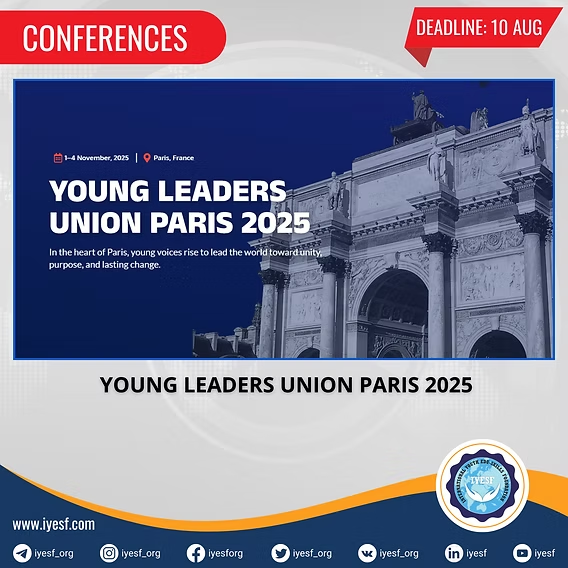
Young Leaders Union Conference 2025 in Paris (Fully Funded)
Join Global Changemakers in Paris! Fully Funded International Conference for Students, Professionals, and Social Leaders from All Nationalities and Fields

Yer yürəsinin daxili nüvəsində struktur dəyişiklikləri aşkar edilib
bu nəzəriyyənin doğru olmadığı məlum olub. Seismik dalğalar vasitəsilə aparılan tədqiqatda daxili nüvənin səthindəki dəyişikliklərə dair qeyri-adi məlumatlar əldə edilib.

Lester B Pearson Scholarship 2026 in Canada (Fully Funded)
Applications are now open for the Lester B Pearson Scholarship 2026 at the University of Toronto!