Applying to KAUST - Your Complete Guide for Masters & Ph.D. Programs (Upcoming Admissions)
Admissions Overview & Key Requirements

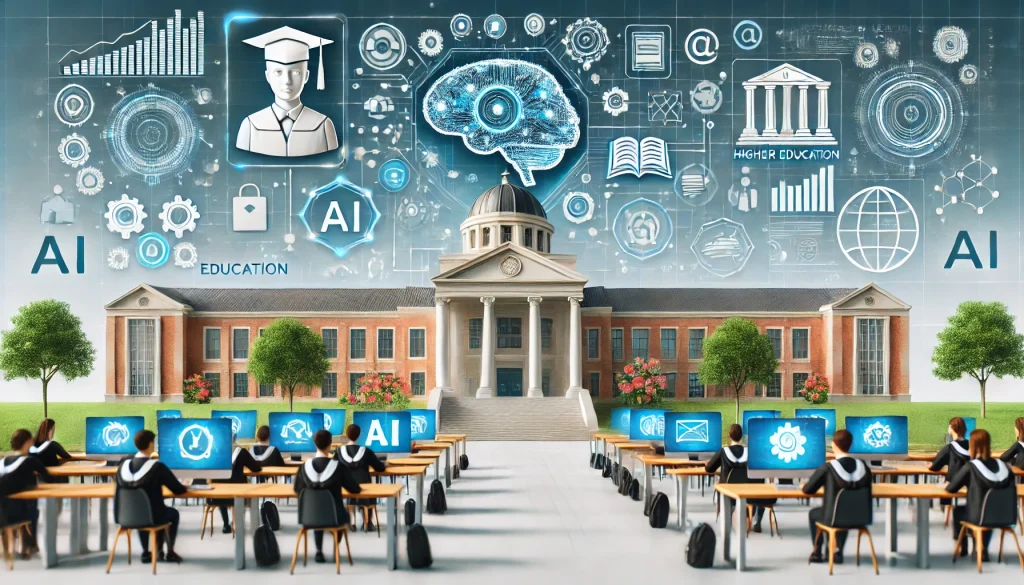
Higher education institutions must make structural changes to succeed in the rapidly evolving digital landscape, The Times Higher Education reports. Melissa Loble, chief academic officer at the educational technology company Instructure, says that while universities are attempting to use artificial intelligence (AI) and other digital tools, they have yet to give sufficient attention to system, curriculum, and assessment innovations needed to fully realize their potential.
Loble emphasizes that 2026 should be “the year of reconstruction” in higher education. This involves improving pedagogy, redesigning assessment methods, and integrating different technological systems. She also recommends including modules on the ethical use of AI in curricula so that students gain both technological skills and an understanding of ethical principles.
The impact of AI on the education process presents both opportunities and challenges. Recent studies show that the majority of academic administrators, educators, and students believe AI is being misused, yet most also acknowledge its potential positive impact on learning. Loble notes that addressing the issue solely through technology is not enough; assessment and pedagogical methods must be updated.
Student needs and demographics are also changing. Universities in the United States anticipate a potential decline in first-year enrolments in the near future. Loble describes this as an “enrolment shift” rather than a “cliff,” highlighting that where, what, and how people study is evolving. Microcredentials, short courses, and flexible hybrid learning models provide more suitable learning opportunities for both students and professionals.
Digital transformation is not only crucial in the classroom but also across all university operations. Loble points out that many institutions still rely on outdated, siloed technological systems that cannot integrate efficiently with AI and new tools. According to her, unified data systems and integrated, flexible technological ecosystems are essential for universities to succeed in the future.
In conclusion, higher education institutions must enhance course quality, rethink assessment methods, and coordinate their technological systems to ensure they can meet the demands of students, the workforce, and ongoing technological change in 2026.
Share
Applying to KAUST - Your Complete Guide for Masters & Ph.D. Programs (Upcoming Admissions)
Admissions Overview & Key Requirements

An mRNA cancer vaccine may offer long-term protection
A small clinical trial suggests the treatment could help keep pancreatic cancer from returning

Registration Opens for SAF 2025: International STEAM Azerbaijan Festival Welcomes Global Youth
The International STEAM Azerbaijan Festival (SAF) has officially opened registration for its 2025 edition!

Young Leaders Union Conference 2025 in Paris (Fully Funded)
Join Global Changemakers in Paris! Fully Funded International Conference for Students, Professionals, and Social Leaders from All Nationalities and Fields

Yer yürəsinin daxili nüvəsində struktur dəyişiklikləri aşkar edilib
bu nəzəriyyənin doğru olmadığı məlum olub. Seismik dalğalar vasitəsilə aparılan tədqiqatda daxili nüvənin səthindəki dəyişikliklərə dair qeyri-adi məlumatlar əldə edilib.

Lester B Pearson Scholarship 2026 in Canada (Fully Funded)
Applications are now open for the Lester B Pearson Scholarship 2026 at the University of Toronto!