Applying to KAUST - Your Complete Guide for Masters & Ph.D. Programs (Upcoming Admissions)
Admissions Overview & Key Requirements

File: Vocal Media
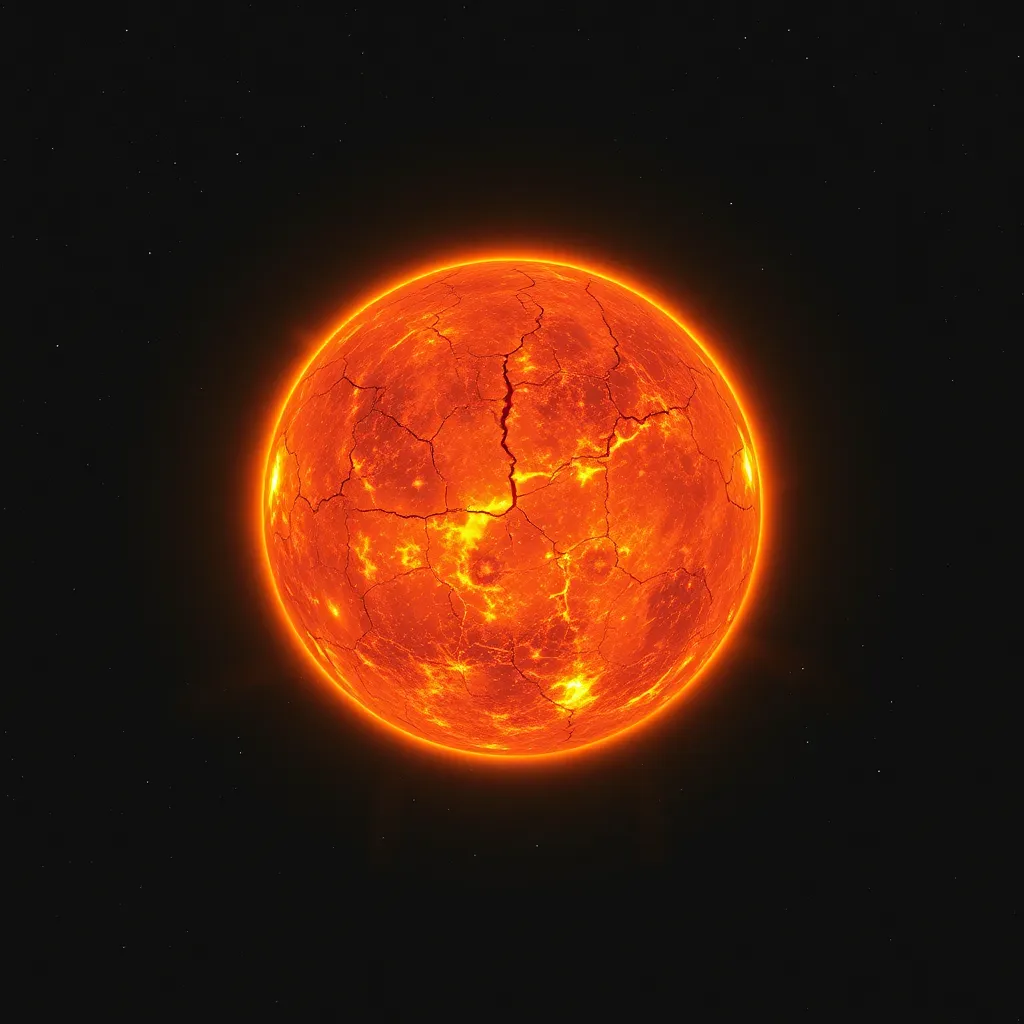
The Sun is the primary source of energy for life on Earth, providing light, heat and the conditions necessary for life to exist. However, like all stars, it will not last forever. One day, its nuclear fuel will be exhausted, bringing its long life cycle to an end. According to scientists, the Sun will begin to run out of hydrogen in about 5 billion years. Once this happens, it will enter its red giant phase. During this stage, energy production will increase dramatically, causing the Sun to expand to more than 200 times its current size.
Theoretical models and observations from the Gaia spacecraft suggest that the Sun could eventually engulf Earth when it reaches its maximum size. Even if Earth avoids being swallowed, increasing temperatures and powerful solar winds could strip away the planet’s atmosphere and evaporate its oceans. Researchers note that Earth is already slowly losing water. Ultraviolet radiation from the Sun and particles carried by the solar wind break apart water molecules in the upper atmosphere. Estimates suggest that within about one billion years, Earth could lose most of its water and become more similar to Mars. After the red giant phase, the Sun will begin converting helium into heavier elements such as carbon and oxygen. Once the helium supply is exhausted, gravity will take over and the Sun will rapidly contract into a dense stellar remnant.
Scientists say this final remnant will consist mainly of carbon and oxygen. Although it will be roughly the size of Earth, it will contain a large portion of the Sun’s mass, making it extremely dense. Over billions of years, it will gradually cool and fade. Unlike much larger stars, the Sun is not massive enough to end its life in a supernova explosion or become a black hole. Astronomers explain that a star generally needs to be at least eight to ten times more massive than the Sun to explode as a supernova, while the formation of a black hole typically requires an initial mass around twenty times greater than that of the Sun.
Scientists also believe that the gas and dust released during the Sun’s final stages will enrich interstellar space with heavier elements such as carbon, nitrogen and oxygen. These materials may later contribute to the formation of new stars and planetary systems. As a result, the Sun is expected to end its life not in a violent explosion, but through a gradual process that leaves behind a cooling stellar remnant.
Source: Space.com
Share
Applying to KAUST - Your Complete Guide for Masters & Ph.D. Programs (Upcoming Admissions)
Admissions Overview & Key Requirements

An mRNA cancer vaccine may offer long-term protection
A small clinical trial suggests the treatment could help keep pancreatic cancer from returning

Registration Opens for SAF 2025: International STEAM Azerbaijan Festival Welcomes Global Youth
The International STEAM Azerbaijan Festival (SAF) has officially opened registration for its 2025 edition!

Young Leaders Union Conference 2025 in Paris (Fully Funded)
Join Global Changemakers in Paris! Fully Funded International Conference for Students, Professionals, and Social Leaders from All Nationalities and Fields

Yer yürəsinin daxili nüvəsində struktur dəyişiklikləri aşkar edilib
bu nəzəriyyənin doğru olmadığı məlum olub. Seismik dalğalar vasitəsilə aparılan tədqiqatda daxili nüvənin səthindəki dəyişikliklərə dair qeyri-adi məlumatlar əldə edilib.

Lester B Pearson Scholarship 2026 in Canada (Fully Funded)
Applications are now open for the Lester B Pearson Scholarship 2026 at the University of Toronto!